Quick answer
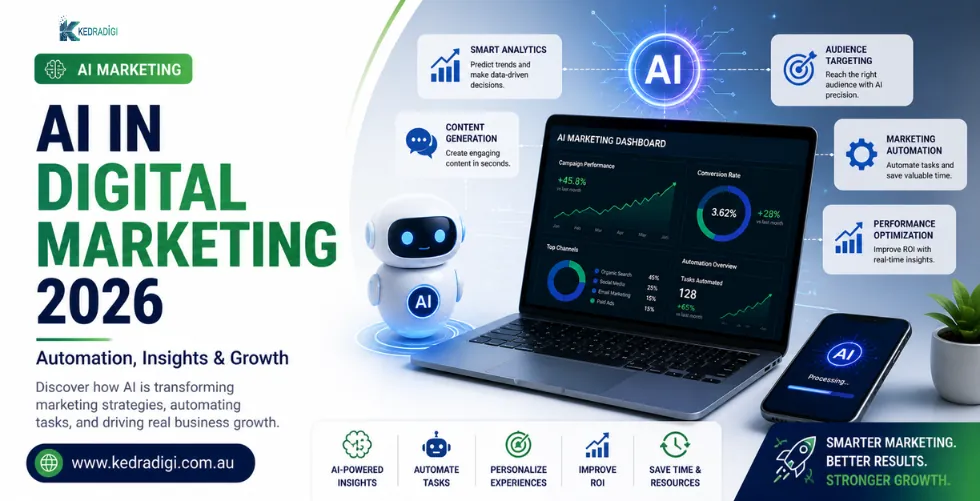
AI in digital marketing speeds up research, drafting, targeting and reporting. The best results come from AI-assisted, human-led work: people set strategy, check facts and keep the brand voice, while AI handles the groundwork.
Key takeaways
- AI is best at speeding up research, drafting, analysis and optimisation.
- People still need to set strategy, check facts and keep the brand voice human.
- Ad platforms already use AI heavily, so good data and creative matter more than ever.
- Start with one workflow, measure the time saved, then expand.
Where does AI help marketers most?
| Channel | How AI helps |
|---|---|
| SEO and content | Keyword clustering, outlines, briefs |
| Paid ads | Automated bidding and creative variations |
| Subject line tests and send-time optimisation | |
| Social media | Caption drafts and repurposing |
| Analytics | Spotting trends and summarising reports |
How should you use AI for content?
AI can draft outlines and turn one article into posts and emails. AI-only content tends to sound generic and can include errors.
Google rewards helpful content, so add real expertise, examples and your own voice.
How do you start?
- List repetitive weekly tasks.
- Pick one with clear time savings, such as reporting.
- Set rules for voice, fact-checking and privacy.
- Measure the result, then move to the next workflow.
What risks should you manage?
- Accuracy: AI can invent facts.
- Privacy: do not paste customer data into consumer tools.
- Sameness: shared prompts create similar content.
- Over-automation: ad budgets still need oversight.
Our AI search optimisation service keeps you visible as search changes.
What does a week with AI look like?
- Monday: summarise last week's analytics and plan tests.
- Tuesday: outline a post, then the expert writes the key sections.
- Wednesday: turn it into social posts and an email.
- Thursday: generate ad variations and let the platform test them.
- Friday: review results and check facts.
AI does the first draft or heavy analysis, and a person makes the final call.
Bottom line
AI can take the grunt work out of research, drafting and reporting, but strategy and the final check stay with people. Pick one workflow, measure the time saved and grow from there.