Quick answer
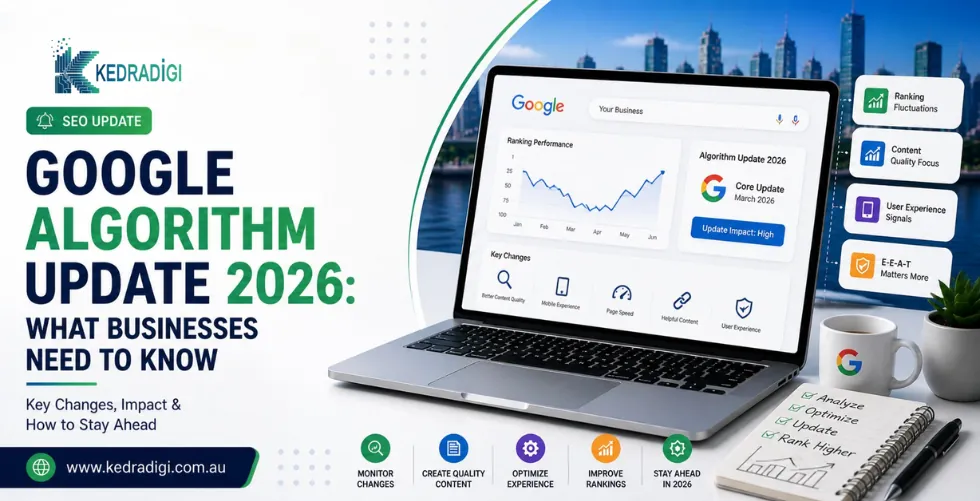
Google runs core updates several times a year, plus spam updates and smaller changes. They reward helpful, trustworthy content, so recover from a drop by improving real quality, not by chasing quick tricks.
Key takeaways
- Google runs core updates several times a year, plus spam and smaller updates.
- Updates reward helpful, trustworthy content written for people, not search engines.
- Check Search Console and analytics before reacting to a drop.
- Recovery comes from genuine improvements, not quick tricks.
What types of updates are there?
| Update type | What it targets |
|---|---|
| Core updates | Broad changes to quality and relevance |
| Spam updates | Link schemes and scaled spam content |
| Helpful content signals | Content written mainly to rank |
| AI features | How AI Overviews and results display |
What does Google reward?
- Experience, expertise, authority and trust (E-E-A-T).
- Pages that match search intent.
- Fast, mobile-friendly pages without clutter.
- Links and mentions from relevant, trusted sites.
How do you tell if an update hit you?
- Check Search Console for drops around the update date.
- Compare which pages and queries lost ground.
- Rule out site changes, tracking problems and seasonality.
- Study who replaced you and what their pages do better.
Do not make big changes while an update is still rolling out.
How do you recover?
- Improve, merge or remove thin and outdated pages.
- Add first-hand experience and named authors.
- Fix crawling errors, slow pages and broken links.
- Stop buying links and earn genuine mentions.
Recovery often shows after a later core update.
What mistakes should you avoid?
- Rewriting every page at once.
- Trusting services that promise quick fixes.
- Publishing unedited AI content.
- Deleting pages that still bring traffic.
What about AI Overviews?
AI Overviews answer many questions directly. Write clear answers to specific questions, use good headings and schema markup, and build a reputation worth citing.
Our SEO services team can audit a drop and recommend next steps.
What should you keep a record of?
Keep a simple log of site changes and update dates. When rankings move, you will know whether it was Google, a site change or something else.
Bottom line
Do not panic after an update. Check your data, then keep improving helpful, trustworthy content, because that is what Google keeps rewarding.