Quick answer
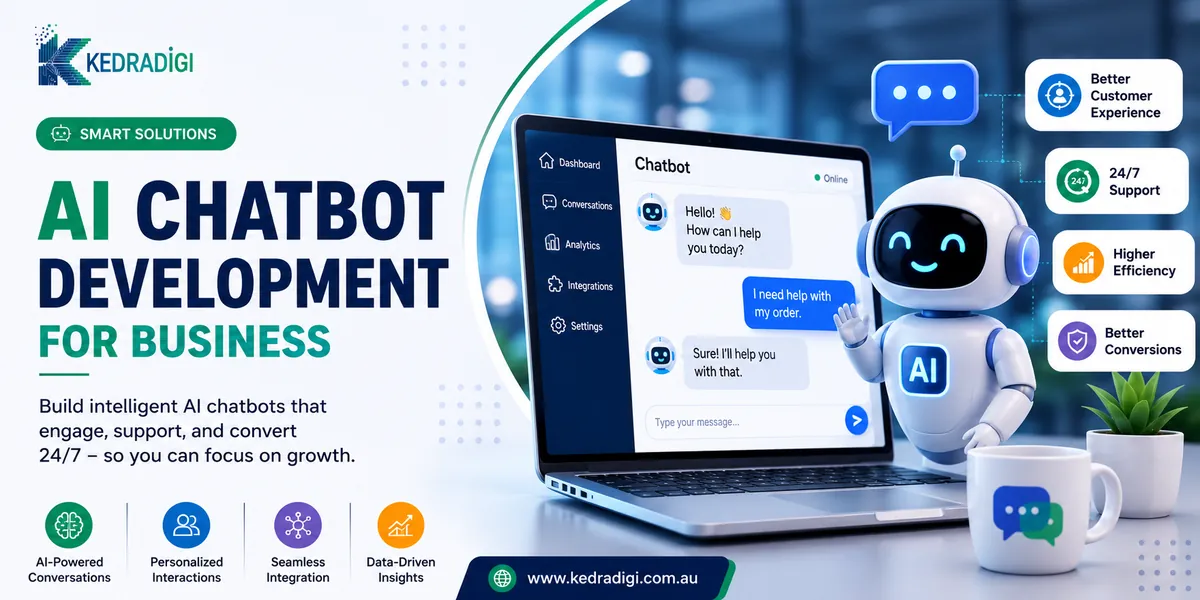
An AI chatbot uses a language model to understand everyday questions and reply helpfully, and can take actions such as booking or checking an order. It works best when grounded in your own content, with an easy handover to a person.
Key takeaways
- Modern chatbots use large language models to understand questions written in everyday language.
- The best results come from grounding the bot in your own content: FAQs, policies and product data.
- Always offer an easy handover to a real person.
- Start with one clear job, such as support or lead capture, then expand.
Where do chatbots help most?
- Support: delivery, returns and opening hours.
- Lead capture: qualifying enquiries for your sales team.
- Bookings: checking availability and confirming.
- Internal help desks: staff questions about policies and IT.
Which features matter?
| Feature | Why it matters |
|---|---|
| Answers from your content | Accurate, on-brand replies |
| Human handover | Customers can reach a person |
| CRM integration | Leads land where your team works |
| Analytics | Shows where the bot struggles |
How do you keep answers accurate?
Language models can sound confident when they are wrong. Retrieval-augmented generation lets the bot look up your approved content first.
Tell it to say "I'm not sure" and hand over, and treat chat data under the Privacy Act.
How does development work?
- Pick one job for the bot.
- Gather FAQs, policies and product information.
- Design tone and escalation rules.
- Connect your systems.
- Test with real questions, then review chats regularly.
What mistakes should you avoid?
- Launching without enough knowledge.
- Hiding the option to talk to a person.
- Trying to automate everything on day one.
Our AI chatbot development team can help scope the first version.
What should go in a chatbot brief?
- The main job and the questions it should answer.
- Where it will live: website, Messenger or WhatsApp.
- Systems it must connect to.
- Topics it must never answer.
- Your brand voice, with a few example replies.
A short brief speeds up planning and leads to a better first version.
Bottom line
A good chatbot does one job well, answers from your own content and hands over to a person when it should. Begin with support or lead capture and build from there.