
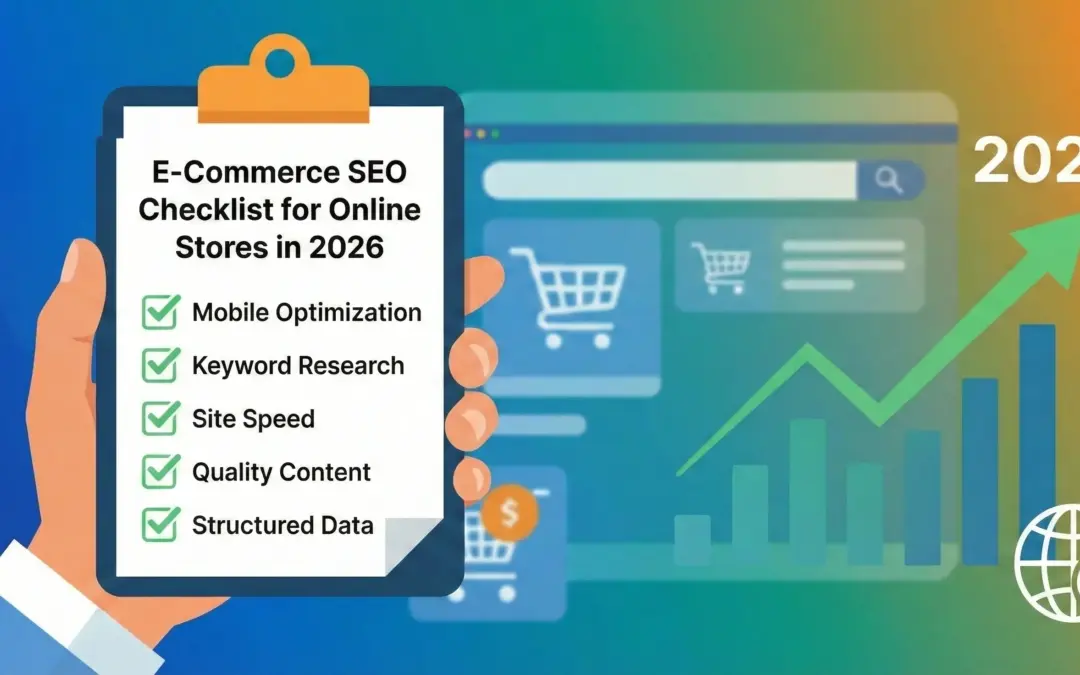
E-Commerce SEO Checklist for Online Stores in 2026
E-commerce competition in 2026 is tougher than ever. Australian online retailers are no longer winning on price alone—they’re competing on how visible, trustworthy, and easy their stores are to use. Even the best products struggle to sell if customers can’t find them when they search.
This practical guide outlines a clear eCommerce SEO checklist for 2026, helping online store owners improve search rankings, attract ready-to-buy visitors, and convert traffic across Google, Bing, and AI-powered search platforms.
What Is E-Commerce SEO?
E-commerce SEO is the process of optimizing online store pages so products rank higher in search results and attract customers who are ready to buy.
Why E-Commerce SEO Matters More in 2026
Search engines and AI platforms prioritize stores that deliver:
- Relevant product information
- Fast and reliable experiences
- Clear trust signals
- Strong engagement metrics
Applying a structured Ecommerce SEO Checklist 2026 helps stores gain sustainable traffic without relying entirely on paid ads.
E-Commerce SEO Checklist for 2026
1. Keyword Research Based on Purchase Intent
Not all traffic converts.
Effective Ecommerce SEO Checklist 2026 keyword research focuses on:
- Product-specific keywords
- Category-level search terms
- Long-tail buying phrases
Target keywords that indicate intent, not just volume.
2. Optimise Product Page Titles and Descriptions
Product pages drive revenue.
High-impact Ecommerce SEO Checklist 2026 optimization includes:
- Clear, keyword-focused titles
- Unique product descriptions
- Benefit-driven copy
- Natural keyword placement
Avoid duplicate content across similar products.
3. Improve Category Page SEO
Category pages often rank better than individual products.
Strong Ecommerce SEO Checklist 2026 category pages include:
- Introductory content explaining the category
- Logical product filtering
- SEO-friendly URLs
- Internal links to related categories
These pages support both SEO and navigation.
4. Optimise Images for Speed and Search
Images influence both rankings and conversions.
Image-focused Ecommerce SEO Checklist 2026 steps:
- Compress images without losing quality
- Use descriptive file names
- Add relevant alt text
- Enable lazy loading
Optimized images improve speed and accessibility.
5. Ensure Mobile-First Shopping Experience
Most purchases now start on mobile.
Mobile-optimized Ecommerce SEO Checklist 2026 elements include:
- Responsive design
- Fast checkout flow
- Easy navigation
- Clear calls to action
Mobile usability directly affects rankings and sales.
6. Strengthen Technical SEO Foundations
Technical issues can block growth.
Core Ecommerce SEO Checklist 2026 technical priorities:
- Clean site architecture
- Proper indexing and crawlability
- Secure HTTPS
- Fast page load times
Technical SEO supports every other optimization effort.
7. Build Trust Signals Across the Store
Trust impacts conversions and rankings.
Trust-focused Ecommerce SEO Checklist 2026 signals include:
- Customer reviews and ratings
- Clear shipping and return policies
- Secure payment indicators
- Transparent business information
Trusted stores perform better across search and AI platforms.
8. Internal Linking for Better Crawlability
Internal links guide users and search engines.
Effective Ecommerce SEO Checklist 2026 linking:
- Connects products to categories
- Highlights best-selling items
- Supports content discovery
Good internal linking improves SEO and user experience.
9. Optimise for AI and Rich Search Results
AI search is shaping how products are discovered.
AI-friendly Ecommerce SEO Checklist 2026 practices:
- Structured product data
- Clear descriptions and specs
- FAQ sections for common questions
This increases eligibility for AI Overviews and rich results.
10. Track Performance and Optimise Continuously
SEO is an ongoing process.
Performance-driven Ecommerce SEO Checklist 2026 tracking includes:
- Keyword rankings
- Conversion rates
- User behaviour metrics
- Revenue from organic traffic
Data helps refine strategy and prioritize improvements.
Common E-Commerce SEO Mistakes to Avoid
Avoid:
- Thin or duplicated product content
- Ignoring category pages
- Slow page speed
- Poor mobile experience
Consistent application of the Ecommerce SEO Checklist 2026 prevents these issues.
FAQs: E-Commerce SEO in 2026
1. How long does e-commerce SEO take to work?
Initial improvements may appear in 2–3 months, with stronger growth over time.
2. Is e-commerce SEO better than paid ads?
SEO provides long-term traffic, while paid ads offer immediate visibility. Both work best together.
3. Do small online stores need SEO?
Yes. SEO helps small stores compete with larger brands through relevance and quality.
4. Does site speed affect e-commerce SEO?
Yes. Speed impacts rankings, user experience, and conversions.
5. Can AI search drive product sales?
Yes. AI-generated results increasingly influence buying decisions.
Key Takeaway
In 2026, e-commerce SEO success depends on strong product optimization, fast performance, mobile usability, and trust signals. Online stores that follow a structured SEO checklist achieve consistent visibility and sustainable sales growth.