Quick answer
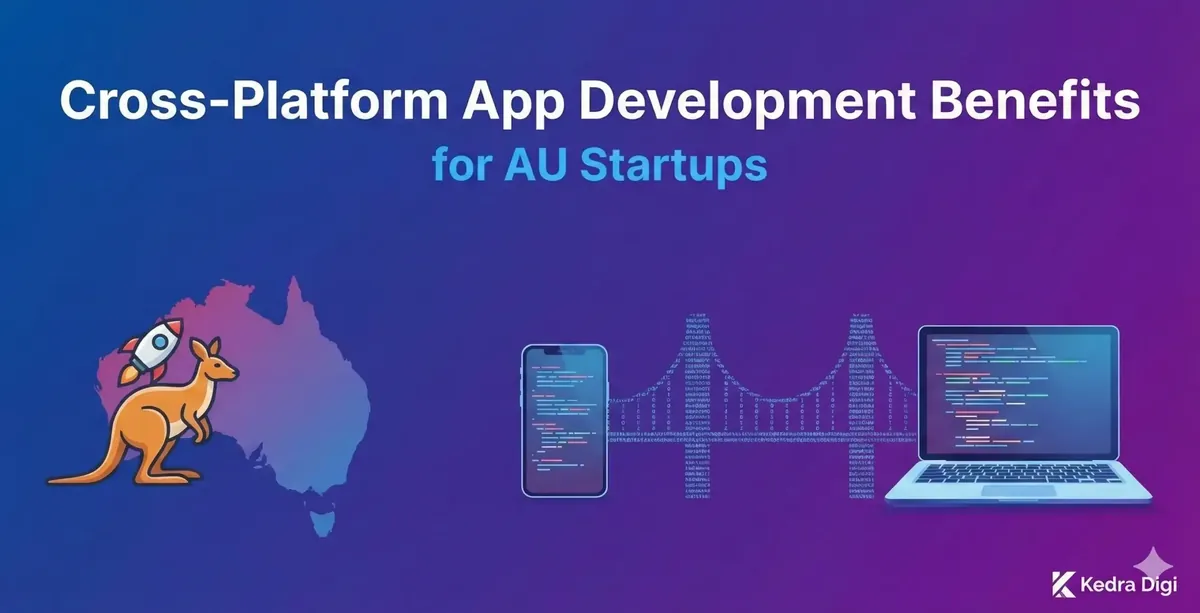
Cross-platform development uses frameworks such as Flutter and React Native to build one codebase that runs on iOS and Android. For most business apps it means faster launch, a smaller team and easier updates without a noticeable drop in performance.
Key takeaways
- One codebase serves iOS and Android, keeping the team small and focused.
- Features and fixes reach both platforms at the same time.
- Modern frameworks deliver near-native performance for most apps.
- Native still wins for apps that rely heavily on device hardware.
What are the main benefits?
- Faster time to market: build once instead of twice.
- A smaller, more focused team.
- A consistent experience and brand on every device.
- Easier updates: fixes and features reach both platforms together.
- More reach from day one, since Australia is split between iPhone and Android.
Is performance good enough?
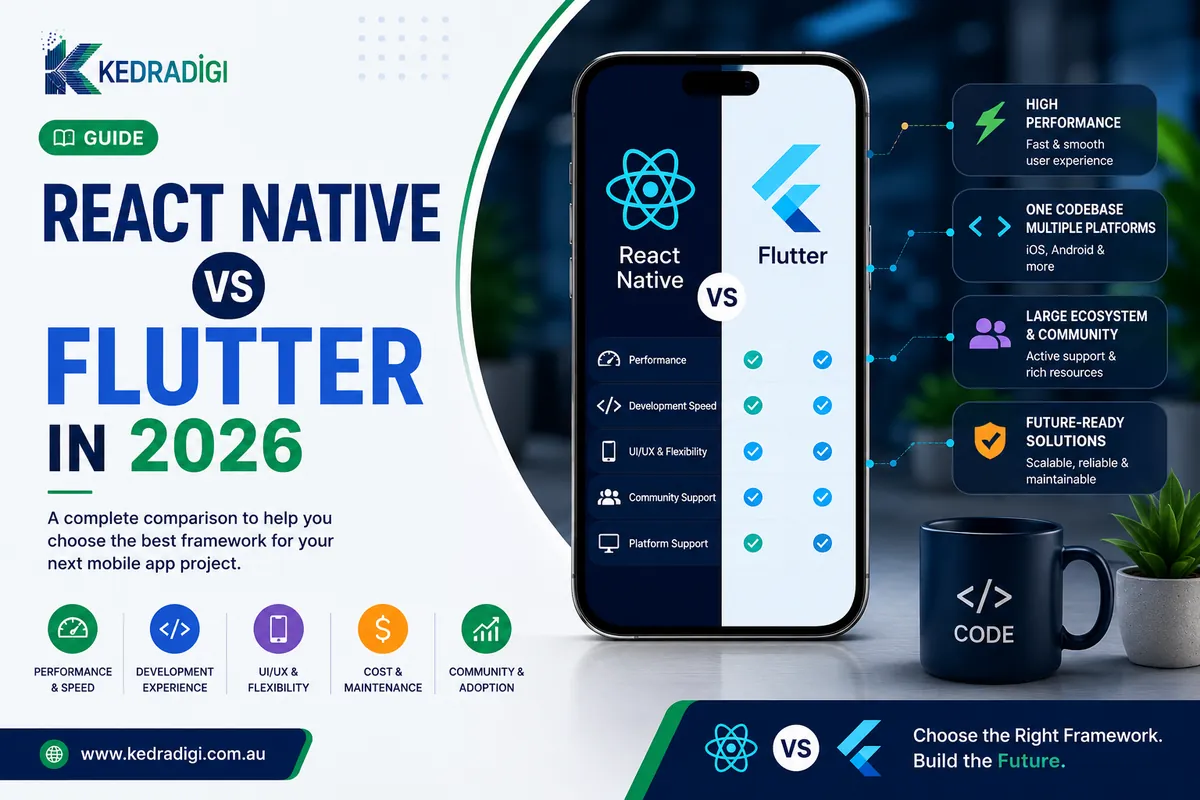
Flutter compiles to native code, and React Native's newer architecture removes much of its old overhead. For most business apps, users cannot tell the difference from native.
It is also a good fit for MVPs, because you can test an idea quickly and scale the same codebase.
How does it compare with native?
| Cross-platform | Native | |
|---|---|---|
| Codebases | One | Two |
| Launch speed | Faster | Slower |
| Performance | Very good for most apps | Best possible |
| Device features | Most supported | Full access |
When is native the better choice?
- Heavy use of Bluetooth, AR, advanced camera or background processing.
- Games and graphics-intensive apps.
- Apps that must adopt new platform features on release day.
How do you plan a project?
- Define the core problem and main user flows.
- Check framework support for must-have device features.
- Build an MVP with analytics and crash reporting from day one.
- Release, gather feedback and improve in small updates.
Framework choice matters less than good architecture and testing. Our cross-platform app development team can help.
Which questions should you ask a development partner?
- Which framework do you recommend, and why?
- How do you handle features that need native code?
- How do you test on different devices?
Bottom line
One codebase for iOS and Android keeps a small team focused and gets updates to everyone at once. Choose native only if your app relies heavily on device hardware.