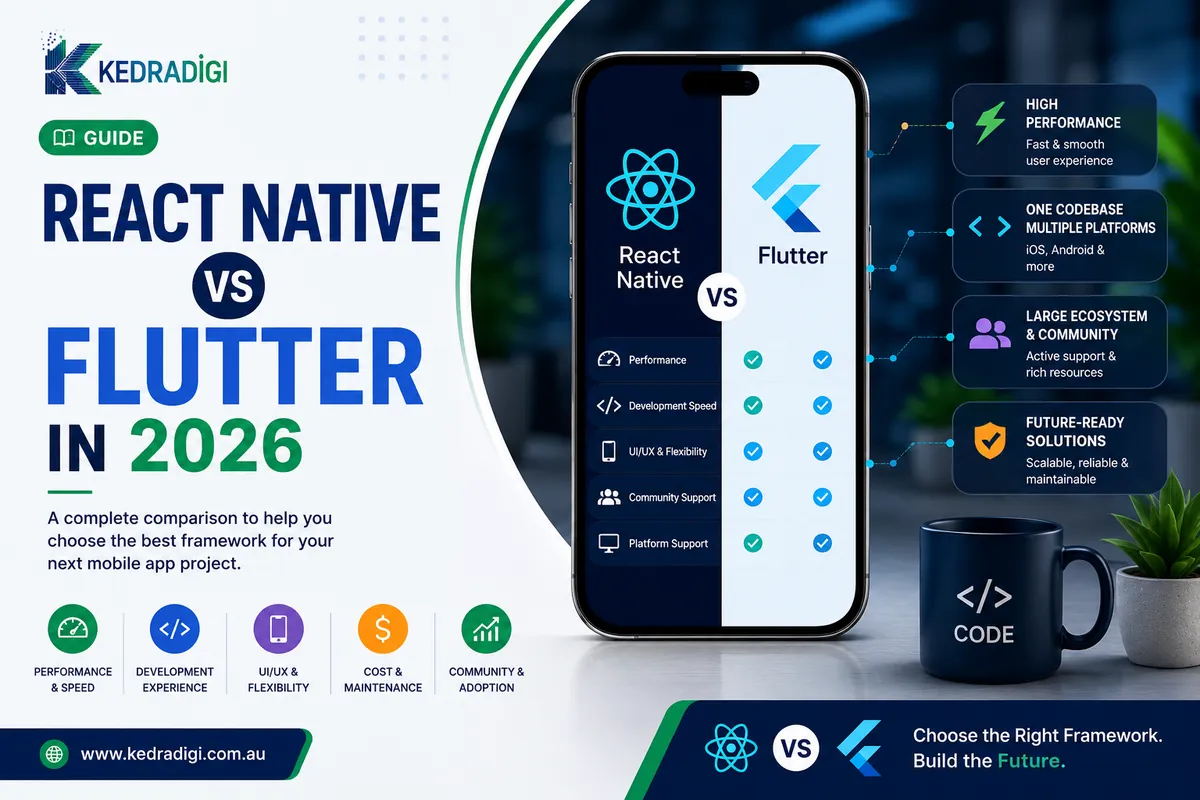
React Native vs Flutter in 2026

Choosing the right cross-platform framework is one of the most important decisions when building a mobile application. The debate around React Native vs Flutter continues in 2026 as both frameworks help businesses build Android and iOS applications from a single codebase.

However, each framework has unique strengths, and selecting the right one depends on your business goals, budget, performance requirements, and long-term scalability.

This guide compares React Native vs Flutter to help startups and businesses make an informed decision.

What Is React Native?

React Native is an open-source framework developed by Meta. It allows developers to build mobile applications using JavaScript and React while sharing code between Android and iOS.

It is widely used for:

  • Business applications
  • E-commerce apps
  • Social media platforms
  • Enterprise solutions

What Is Flutter?

Flutter is Google’s UI toolkit for building natively compiled applications using Dart. It enables developers to create visually rich applications with excellent performance using a single codebase.

Flutter is popular for:

  • Startup MVPs
  • Enterprise applications
  • Healthcare apps
  • FinTech solutions
  • Custom business applications

React Native vs Flutter Comparison

Development Speed

Both frameworks support rapid development.

Flutter offers Hot Reload with a rich widget library, while React Native benefits from JavaScript’s large ecosystem.

Performance

Flutter generally provides better performance because it compiles directly into native machine code.

React Native performs well but depends on a JavaScript bridge for some operations.

User Interface

Flutter provides a consistent UI across Android and iOS through its own widget system.

React Native uses native UI components, making apps feel closer to each platform’s design language.

Learning Curve

React Native is easier for teams already familiar with JavaScript and React.

Flutter requires learning Dart but offers a modern and developer-friendly experience.

Community Support

Both frameworks have strong communities, extensive documentation, and active developer ecosystems.

Scalability

Both frameworks support scalable applications.

Flutter is often preferred for projects requiring complex animations, custom interfaces, and long-term product growth.

When Should You Choose Flutter?

Flutter is an excellent choice if you need:

  • High-performance applications
  • Beautiful custom UI
  • Faster MVP development
  • Consistent design across platforms
  • Long-term scalability

When Should You Choose React Native?

React Native is a good option if:

  • Your team already uses JavaScript
  • You have existing React projects
  • You need quick integration with web technologies
  • Native platform components are a priority

Key Factors to Consider

Before choosing between React Native vs Flutter, evaluate:

  • Business objectives
  • Target audience
  • Development timeline
  • Budget
  • Future scalability
  • Performance expectations
  • Team expertise

Choosing the right framework early can reduce future development costs and simplify maintenance.

Future Trends in Cross-Platform Development

Cross-platform development continues to evolve with:

  • AI-powered mobile applications
  • Faster development tools
  • Improved cloud integration
  • Better application security
  • Enhanced UI frameworks
  • Smarter automation workflows

Both Flutter and React Native are expected to remain popular choices for modern mobile application development.

Frequently Asked Questions

Which is better, React Native or Flutter?

It depends on your project requirements, team expertise, and business goals.

Is Flutter faster than React Native?

Flutter generally offers better performance because it compiles directly into native code.

Which framework is easier to learn?

React Native is easier for JavaScript developers, while Flutter requires learning Dart.

Can both build Android and iOS apps?

Yes. Both frameworks support Android and iOS from a single codebase.

Which framework is better for startups?

Flutter is often preferred for startups because of its performance, UI flexibility, and rapid development capabilities.

Are React Native and Flutter suitable for enterprise apps?

Yes. Both frameworks are widely used for enterprise-grade mobile applications.

Which framework has better long-term support?

Both are actively maintained by Meta and Google, making them reliable choices for future projects.

Conclusion

The choice between React Native vs Flutter depends on your business objectives rather than a single “best” framework. React Native is ideal for teams with JavaScript expertise and existing React projects, while Flutter excels in performance, UI customization, and scalable application development.

Carefully evaluating your project requirements, development resources, and long-term goals will help you select the framework that delivers the best value for your business and users.