Healthcare App Development Guide

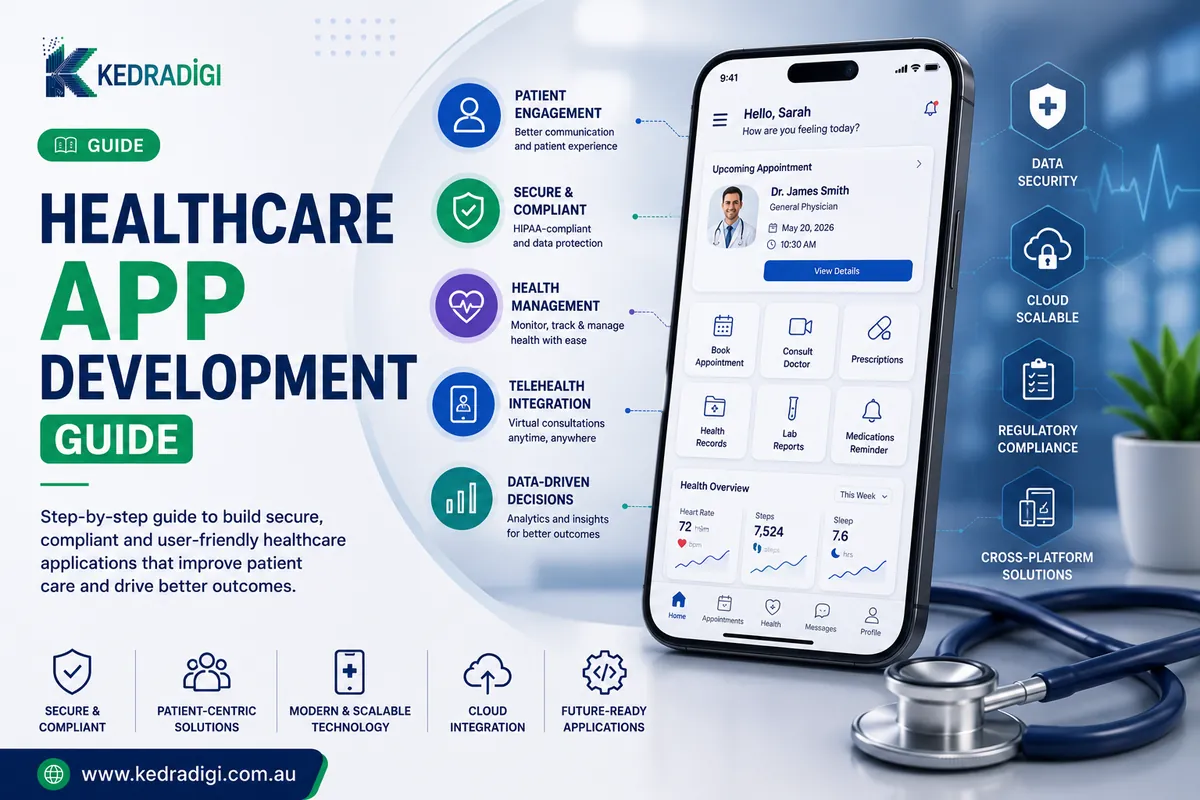
The healthcare industry is rapidly embracing digital technology to improve patient care, streamline operations, and enhance communication between healthcare providers and patients. This Healthcare App Development Guide explains how businesses and healthcare organisations can build secure, scalable, and user-friendly healthcare applications that meet the growing demands of modern healthcare.

From telemedicine platforms to patient monitoring systems, healthcare apps are transforming the way medical services are delivered. Following a Healthcare App Development Guide helps organisations create reliable applications that improve accessibility, efficiency, and patient outcomes.

Why Healthcare Apps Are Important

Patients increasingly expect convenient access to healthcare services through mobile devices. Healthcare providers are also looking for smarter ways to manage appointments, patient records, and remote consultations.

A modern healthcare application helps organisations:

  • Improve patient engagement
  • Reduce administrative work
  • Enable virtual consultations
  • Simplify appointment scheduling
  • Enhance communication
  • Improve operational efficiency

Healthcare apps have become an essential part of digital healthcare services.

Essential Features of Healthcare Apps

Patient Registration

Allow users to create secure accounts and manage their healthcare information.

Appointment Scheduling

Patients can book, reschedule, and receive reminders for medical appointments.

Telemedicine Integration

Support video consultations and virtual healthcare services through Telehealth functionality.

Electronic Health Records

Integrate Electronic Health Records (EHR) to provide healthcare professionals with quick access to patient information.

Secure Messaging

Enable secure communication between doctors, patients, and healthcare staff.

Online Payments

Allow patients to make secure payments for consultations and healthcare services.

Benefits of Healthcare App Development

Following a Healthcare App Development Guide provides several business and patient benefits.

These include:

  • Better patient experience
  • Faster access to healthcare services
  • Improved workflow efficiency
  • Reduced paperwork
  • Better communication
  • Enhanced healthcare accessibility
  • Improved patient satisfaction

Healthcare organisations can provide more efficient and personalised care through digital solutions.

Best Practices for Healthcare App Development

To build successful healthcare applications, follow these best practices.

Prioritise Data Security

Protect sensitive medical information using encryption, secure authentication, and role-based access controls.

Ensure Regulatory Compliance

Healthcare applications should comply with regulations such as HIPAA Compliance and other local healthcare data protection requirements where applicable.

Design User-Friendly Interfaces

Simple navigation improves accessibility for both patients and healthcare professionals.

Integrate AI Features

Use AI in Healthcare to support appointment scheduling, symptom assessment, patient engagement, and predictive analytics.

Support Wearable Devices

Enable integration with Wearable Devices for fitness tracking and Remote Patient Monitoring.

Build Scalable Architecture

Design applications that can grow as healthcare organisations expand their services.

Industries Benefiting from Healthcare Apps

Healthcare app development supports various sectors including:

  • Hospitals
  • Clinics
  • Diagnostic Centres
  • Telemedicine Providers
  • Pharmacies
  • Health Insurance Companies
  • Fitness & Wellness Platforms
  • Home Healthcare Services

Each organisation can customise features based on its healthcare services.

Future Trends in Healthcare App Development

Healthcare technology continues to evolve rapidly.

Emerging trends include:

  • AI-powered diagnosis support
  • Remote Patient Monitoring
  • Predictive healthcare analytics
  • Voice-enabled healthcare assistants
  • Internet of Medical Things (IoMT)
  • Cloud healthcare platforms
  • Digital health ecosystems

These innovations are improving patient care while making healthcare services more accessible.

Frequently Asked Questions

What is healthcare app development?

Healthcare app development involves creating mobile or web applications for healthcare providers, patients, and medical organisations.

What features should a healthcare app include?

Appointment booking, telemedicine, patient records, secure messaging, notifications, and payment integration.

Are healthcare apps secure?

Yes. Secure healthcare apps use encryption, authentication, and industry-standard security practices.

What is Telehealth?

Telehealth allows patients and healthcare providers to communicate through online consultations.

Can AI improve healthcare applications?

Yes. AI in Healthcare supports diagnosis assistance, automation, patient engagement, and predictive analytics.

Why is HIPAA compliance important?

HIPAA Compliance helps protect sensitive patient health information and ensures data privacy.

Who needs healthcare apps?

Hospitals, clinics, pharmacies, diagnostic centers, insurance providers, and digital healthcare startups.

Conclusion

A well-planned Healthcare App Development Guide helps organisations create secure, efficient, and patient-focused digital healthcare solutions. By integrating Telehealth, Electronic Health Records (EHR), AI in Healthcare, Remote Patient Monitoring, Wearable Devices, and strong Healthcare Data Security, businesses can deliver better healthcare experiences while improving operational efficiency.

As digital healthcare continues to evolve, investing in modern healthcare applications will help organisations enhance patient care, increase accessibility, and remain competitive in the future of healthcare technology.