Quick answer
Flutter builds iOS and Android apps from one codebase, which suits startups with small teams that need to learn fast. Plan a focused MVP, test the core idea with real users and grow from feedback.
Key takeaways
- Flutter builds iOS and Android apps from one codebase, which keeps a small team efficient.
- Plan a focused MVP that tests your core idea, then grow from real feedback.
- Flutter's widgets make custom, polished designs achievable from the first release.
- Choose a team that plans for analytics, testing and updates, not just launch day.
Why do startups choose Flutter?
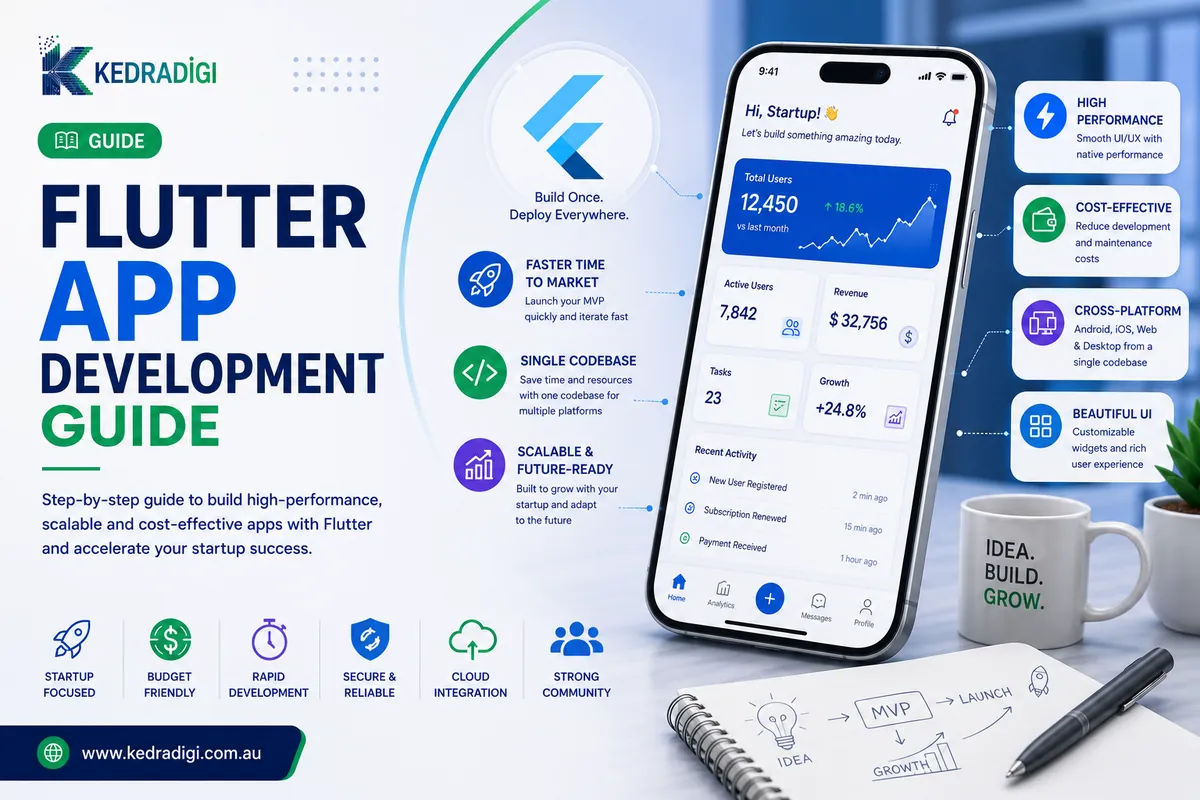
- One codebase for both platforms.
- Hot reload makes design tweaks take minutes.
- A widget system for polished, custom designs.
- Strong performance, because apps compile to native code.
- Room to target web or desktop later.
How do you plan the MVP?
- Write down the one problem you solve and who has it.
- List the steps a user must complete to get value.
- Move everything else to a later list.
- Decide how you will measure success.
- Prototype and test with real users before development.
A common trap is building admin dashboards and five login options before anyone has used the core feature.
What should you watch for?
- Advanced device features may need native code.
- Apps can be slightly larger than native ones.
- Plan platform design conventions early.
- Team experience matters more than the framework.
What shapes project scope?
- The number of screens and user types.
- Backend needs: Firebase is lighter than a custom API.
- Integrations such as payments, maps and bookings.
- Design complexity and offline support.
- Compliance for health, finance and children's apps.
What happens after launch?
Launch is the start of the real work. Plan for crash monitoring, analytics, updates for new iOS and Android versions and a way to collect in-app feedback.
Ask potential partners for apps they have shipped and how they support apps after launch. Our Flutter app development and MVP development teams work with startups at this stage.
Bottom line
Flutter lets a small team ship on iOS and Android from one codebase. Launch a focused first version, learn from real users and build from there.