Quick answer
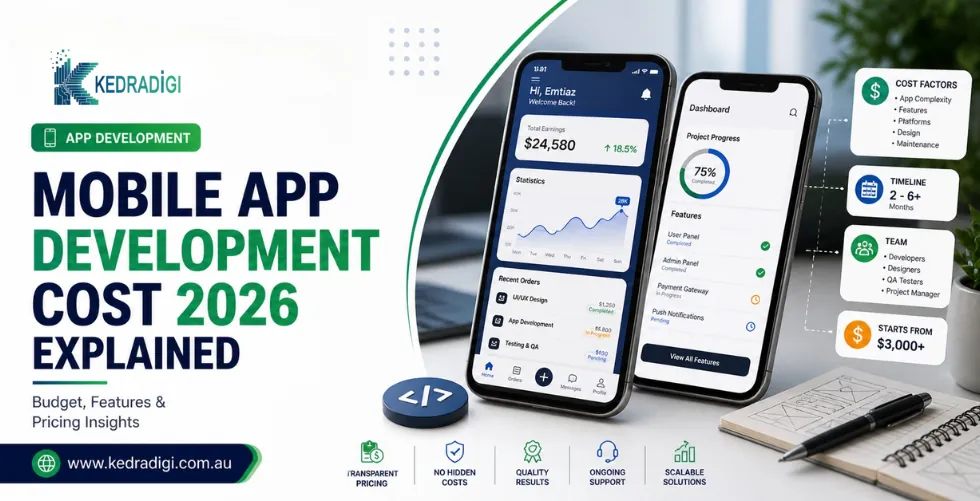
Mobile app project scope is driven by complexity, platform choice, features, design, backend and admin work, and the team. Plan for hosting, updates and support after launch, and start with an MVP to keep the first release focused.
Key takeaways
- Complexity and the number of features have the biggest impact.
- Cross-platform frameworks can reduce effort compared with two native apps.
- Backend systems, integrations and admin panels are often underestimated.
- Plan for ongoing maintenance, hosting and updates after launch.
What drives the scope?
| Complexity | Typical features |
|---|---|
| Simple | A few screens, basic forms, content |
| Medium | Accounts, payments, notifications, integrations |
| Complex | Real-time, marketplaces, AI, offline sync |
Cross-platform frameworks such as Flutter and React Native use one codebase, which usually reduces effort versus two native apps.
Which features add work?
- Sign-up and login, including social logins.
- Payments and subscriptions.
- Push notifications.
- Maps, GPS and live tracking.
- Chat, offline mode and AI features.
Each feature adds design, development and testing.
Why are backend and design often underestimated?
Most apps need a server, database, APIs and an admin panel. Firebase can speed this up, while custom backends offer more control.
Standard components are quicker, while custom animation takes longer. Good UX often removes unnecessary screens.
Which ongoing items should you plan for?
- App Store and Google Play developer accounts.
- Hosting and third-party services.
- Updates for new iOS and Android versions.
- Bug fixes, security patches and new features.
- Marketing to get downloads.
How do you keep the project focused?
- Start with an MVP.
- Use cross-platform where it fits.
- Use proven services for payments and authentication.
- Finalise requirements early.
- Prototype the design before coding.
What does a typical project involve?
Discovery, UX and UI design, development, testing, launch, then support and improvement. Skipping discovery or testing usually adds work later.
Talk to our mobile app development team about your idea, and share goals, users and must-have features so proposals are accurate.
Bottom line
Scope drives most of the effort, and the backend and admin tools are often underestimated. Plan for maintenance and updates after launch as well.