Custom CRM Development Guide

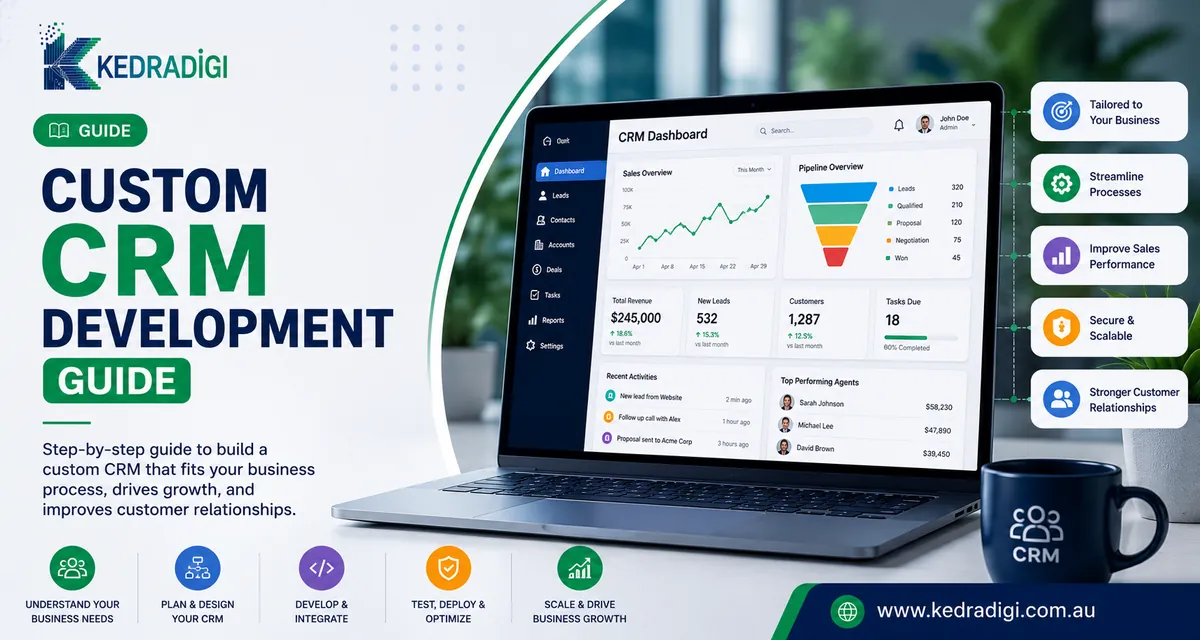
Managing customer relationships effectively is essential for business growth. A well-designed CRM system helps businesses organise customer information, automate sales processes, and improve communication across departments. This Custom CRM Development Guide explains how businesses can build CRM software tailored to their unique workflows instead of relying on generic solutions.

Unlike off-the-shelf platforms, custom CRM software is built around your business requirements. Following a Custom CRM Development Guide helps organisations improve productivity, strengthen customer relationships, and support long-term growth.

What Is Custom CRM Development?

Custom CRM development involves designing and building a Customer Relationship Management system specifically for your business processes.

A custom CRM allows organisations to:

  • Manage customer information
  • Track leads and sales
  • Automate workflows
  • Improve team collaboration
  • Generate business reports
  • Deliver better customer service

This flexibility makes custom CRM software suitable for businesses of all sizes.

Why Businesses Choose Custom CRM Software

Every business has unique processes that standard CRM platforms may not fully support.

Following a Custom CRM Development Guide enables businesses to build software that fits their operations instead of changing their processes to match existing tools.

Key benefits include:

  • Personalised workflows
  • Better scalability
  • Improved productivity
  • Enhanced customer management
  • Lower long-term operational costs
  • Greater business flexibility

Essential Features of a Custom CRM

Contact Management

Store and organise customer details in one secure location for quick access.

Sales Automation

Use Sales Automation to track leads, schedule follow-ups, manage opportunities, and shorten the sales cycle.

Workflow Automation

Automate repetitive tasks such as email notifications, approvals, reminders, and customer follow-ups through Workflow Automation.

Customer Data Management

Centralise customer records, purchase history, support requests, and communication logs using effective Customer Data Management.

Analytics and Reporting

Leverage Data Analytics dashboards to monitor sales performance, customer behavior, and business growth.

API Integration

Connect your CRM with accounting software, ERP systems, websites, marketing tools, and third-party applications using API Integration.

Industries That Benefit from Custom CRM

A Custom CRM Development Guide is valuable for many industries, including:

  • Healthcare
  • Real Estate
  • Education
  • Manufacturing
  • Retail
  • Financial Services
  • Logistics
  • Professional Services
  • Travel
  • SaaS Businesses

Each industry can customise CRM features to meet specific operational requirements.

Best Practices for Custom CRM Development

To maximise the value of your Custom CRM Development Guide, follow these best practices:

Understand Business Requirements

Identify existing challenges before designing the CRM system.

Keep the Interface Simple

An easy-to-use interface encourages employee adoption and improves productivity.

Build for Scalability

Choose an architecture that supports future business growth without major redevelopment.

Prioritise Security

Protect sensitive customer information through encryption, role-based access, backups, and secure authentication.

Choose Cloud CRM

Modern Cloud CRM platforms improve accessibility, collaboration, and system maintenance.

Monitor and Improve

Regularly collect user feedback and enhance CRM functionality based on business needs.

Future Trends in CRM Development

CRM software continues to evolve with new technologies.

Emerging trends include:

  • AI-powered CRM assistants
  • Predictive customer insights
  • Business Automation
  • Generative AI integration
  • Voice-enabled CRM
  • Intelligent workflow recommendations
  • Advanced Digital Transformation strategies

Businesses adopting these technologies will improve customer engagement and operational efficiency.

Frequently Asked Questions

What is custom CRM development?

It is the process of building CRM software tailored to a business’s unique processes and requirements.

Why choose a custom CRM instead of ready-made software?

A custom CRM provides greater flexibility, scalability, and business-specific functionality.

Which businesses need a custom CRM?

Businesses that manage customers, leads, sales, or service operations can benefit from a custom CRM.

Can CRM software automate sales?

Yes. Sales Automation helps manage leads, follow-ups, quotations, and customer interactions.

Is cloud CRM better than on-premise CRM?

For many businesses, Cloud CRM offers easier access, lower maintenance, and better scalability.

Can CRM integrate with other software?

Yes. Modern CRM platforms support API Integration with accounting, ERP, marketing, and e-commerce systems.

Is custom CRM suitable for small businesses?

Yes. A custom CRM can be developed to match the needs and budget of startups, SMEs, and large enterprises.

Conclusion

A well-planned Custom CRM Development Guide helps businesses build software that supports their unique operations, improves customer relationships, and streamlines daily workflows. By combining Sales Automation, Workflow Automation, Customer Data Management, Cloud CRM, API Integration, and Data Analytics, organisations can create a scalable platform that drives productivity and long-term growth.

As businesses continue their Digital Transformation journey, investing in custom CRM development provides greater flexibility, better customer insights, and a stronger foundation for future success.