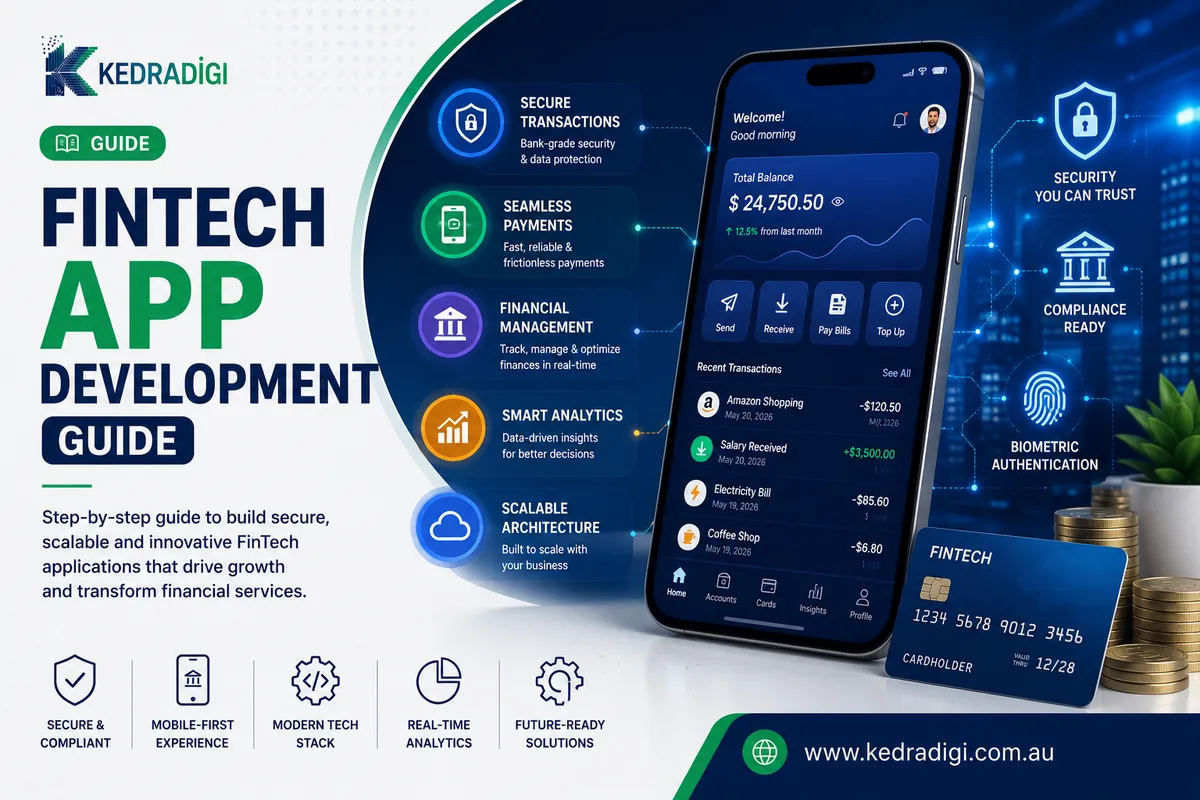
FinTech App Development Guide
The financial industry is rapidly embracing digital innovation to deliver faster, safer, and more convenient services. This FinTech App Development Guide explains how businesses can build secure, scalable, and user-friendly financial applications that meet modern customer expectations.
From digital wallets and online banking to investment platforms and payment solutions, FinTech applications are transforming how people manage money. Following a FinTech App Development Guide helps businesses create reliable financial products while maintaining security, compliance, and excellent user experience.
What Is FinTech App Development?
FinTech app development involves creating software solutions that simplify financial services through digital technology.
These applications support:
- Digital banking
- Online payments
- Money transfers
- Personal finance
- Investment management
- Lending platforms
- Insurance services
Modern FinTech solutions improve convenience while making financial services more accessible.
Why Businesses Invest in FinTech Applications
Following a FinTech App Development Guide enables organisations to deliver secure and efficient financial services.
Major benefits include:
- Faster financial transactions
- Improved customer experience
- Reduced operational costs
- Better fraud detection
- Increased customer engagement
- Scalable financial services
- Digital transformation
Businesses can automate financial operations while improving service quality.
Essential Features of FinTech Apps
Secure User Authentication
Protect customer accounts using biometric login, multi-factor authentication, and encrypted access.
Digital Wallet Integration
Allow users to securely store, transfer, and manage funds using Digital Wallet functionality.
Online Payments
Enable fast and secure Online Payments through multiple payment gateways.
KYC Verification
Integrate KYC Verification to verify customer identities and comply with financial regulations.
Real-Time Notifications
Keep users informed about transactions, account activity, and payment confirmations.
Analytics Dashboard
Provide customers with spending insights, financial reports, and transaction history.
Best Practices for FinTech App Development
To maximise the value of your FinTech App Development Guide, follow these best practices.
Prioritise Cyber Security
Protect financial information using encryption, secure APIs, authentication, and continuous monitoring.
Design a Simple User Experience
Financial applications should be easy to navigate for users of all experience levels.
Ensure Regulatory Compliance
Develop applications that comply with financial regulations applicable to your target market.
Integrate Artificial Intelligence
Use AI in FinTech for fraud detection, customer support, financial recommendations, and predictive analytics.
Build Scalable Infrastructure
Use cloud technologies to support growing customer bases and increasing transaction volumes.
Test Thoroughly
Conduct performance, security, usability, and compliance testing before launch.
Industries Using FinTech Applications
FinTech app development supports many sectors, including:
- Banks
- Financial Institutions
- Insurance Companies
- Investment Firms
- Lending Platforms
- Payment Providers
- Wealth Management Companies
- Accounting Services
- E-commerce Businesses
- Cryptocurrency Platforms
Each organisation can customise FinTech features based on its business model.
Future Trends in FinTech Development
Financial technology continues to evolve rapidly.
Key trends include:
- AI-powered financial assistants
- Blockchain-based payments
- Embedded finance
- Open banking
- Voice banking
- Digital identity verification
- Predictive financial analytics
- Intelligent fraud prevention
Businesses adopting these technologies will improve customer trust and operational efficiency.
Frequently Asked Questions
What is FinTech app development?
FinTech app development involves creating digital applications for banking, payments, investments, lending, and other financial services.
What features should a FinTech app include?
Secure login, digital wallets, online payments, KYC verification, notifications, and analytics.
Why is Cyber Security important in FinTech?
Cyber Security protects sensitive financial data, customer accounts, and online transactions.
Can AI improve FinTech applications?
Yes. AI in FinTech supports fraud detection, customer service, automation, and financial insights.
What is KYC verification?
KYC Verification confirms customer identity to help prevent fraud and meet regulatory requirements.
Are FinTech apps suitable for startups?
Yes. Many startups build digital banking, payment, investment, and financial management applications.
How long does FinTech app development take?
The timeline depends on project complexity, features, integrations, compliance requirements, and testing.
Conclusion
A well-planned FinTech App Development Guide helps businesses create secure, scalable, and customer-focused financial applications. By integrating Digital Wallets, Online Payments, KYC Verification, AI in FinTech, Cyber Security, and modern cloud technologies, organisations can deliver seamless financial experiences while meeting industry standards.
As financial services continue to evolve, investing in FinTech App Development Guide best practices will help businesses improve customer trust, accelerate digital transformation, and remain competitive in the fast-growing financial technology industry.