
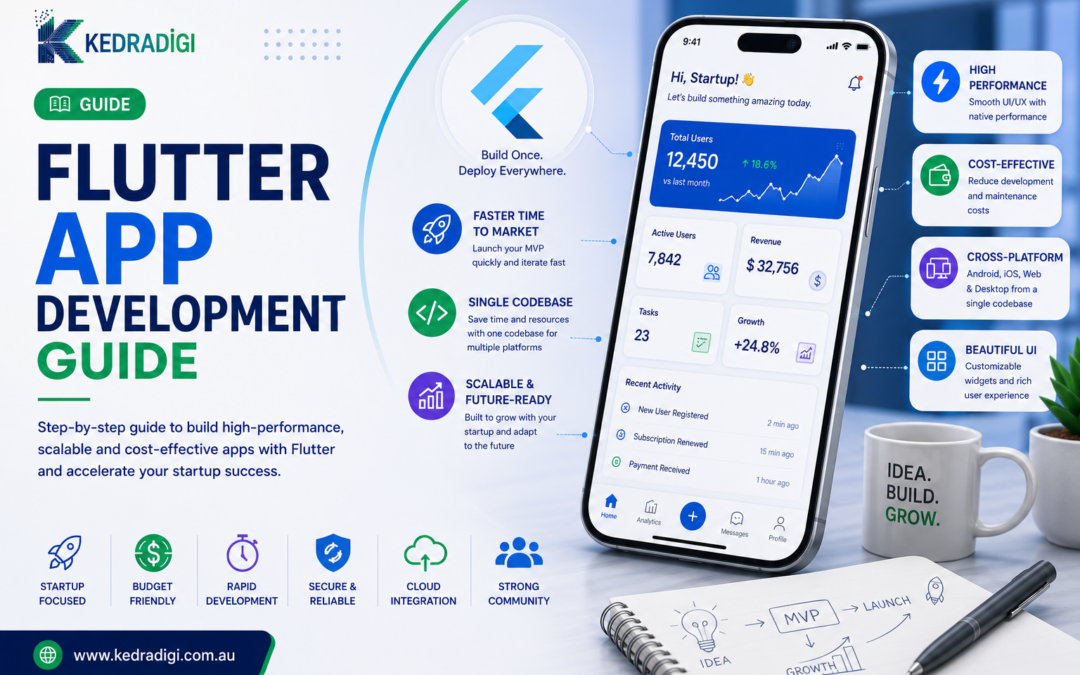
Flutter App Development Guide for Startups
Launching a startup is exciting, but choosing the right technology is one of the most important decisions you’ll make. This Flutter App Development Guide explains why Flutter has become one of the preferred frameworks for startups looking to build modern, scalable, and high-performance mobile applications in 2026.
Flutter, developed by Google, enables developers to create Android and iOS applications using a single codebase. This helps startups reduce development costs, speed up product launches, and deliver a consistent user experience across multiple platforms.
Whether you’re developing an MVP or a feature-rich business application, following a Flutter App Development Guide can help you make informed technology decisions and accelerate your digital journey.
Why Flutter Is a Smart Choice for Startups
Startups usually have limited budgets, small development teams, and aggressive launch timelines. Flutter addresses these challenges by allowing businesses to build applications for Android and iOS simultaneously.
Some major benefits include:
- Single codebase for multiple platforms
- Faster development cycles
- Lower development and maintenance costs
- Native-like performance
- Easy future scalability
- Consistent UI across devices
These advantages help startups launch products faster while keeping development efficient.
Key Features of Flutter
Single Codebase
Flutter allows developers to write one codebase that works across Android and iOS, reducing duplicate work and simplifying future updates.
Fast Development
The Hot Reload feature lets developers instantly view code changes without restarting the application, making development quicker and more productive.
Native Performance
Flutter compiles directly into native machine code, delivering smooth performance, responsive animations, and excellent user experiences.
Rich User Interface
Flutter offers a large collection of customizable widgets that help create modern, attractive, and consistent user interfaces.
Easy Integration
Flutter supports APIs, cloud platforms, payment gateways, authentication, analytics, notifications, maps, and third-party services required by modern applications.
Why Startups Prefer Flutter
A good Flutter App Development Guide focuses on building an MVP quickly so startups can validate business ideas before making larger investments.
Flutter helps businesses:
- Launch products faster
- Reduce development expenses
- Reach Android and iOS users together
- Simplify maintenance
- Scale applications easily
This makes Flutter an excellent choice for startups planning long-term growth.
Industries Using Flutter
Flutter is widely adopted across many industries, including:
- Healthcare
- FinTech
- Education
- E-commerce
- Food Delivery
- Travel
- Logistics
- Real Estate
- SaaS Platforms
- Enterprise Applications
Its flexibility allows businesses to build secure and scalable applications for various use cases.
Flutter vs Traditional App Development
Traditional app development often requires separate Android and iOS teams, increasing project cost and development time.
Following a Flutter App Development Guide offers several advantages:
- One development team
- One codebase
- Faster testing
- Easier maintenance
- Better development efficiency
This allows startups to focus more on product innovation and customer acquisition.
Choosing the Right Flutter Development Company
Selecting the right development partner is as important as choosing the framework itself.
Consider a company that provides:
- Proven Flutter expertise
- Strong UI/UX design
- Secure development practices
- Scalable architecture
- Agile project management
- Ongoing maintenance and support
An experienced Flutter development team can help reduce project risks and deliver better business outcomes.
Best Practices for Flutter App Development
To get the most from your Flutter App Development Guide, follow these best practices:
- Define your business goals clearly.
- Build an MVP first.
- Focus on user experience.
- Test across multiple devices.
- Optimize performance regularly.
- Plan for future scalability.
- Monitor user feedback and analytics.
These practices improve application quality and long-term success.
Frequently Asked Questions
What is Flutter?
Flutter is Google’s cross-platform framework for building Android and iOS applications using one codebase.
Why is Flutter good for startups?
It reduces development time, lowers costs, and supports faster product launches.
Can Flutter build apps for Android and iOS?
Yes. Flutter uses a single codebase to build apps for both platforms.
Is Flutter suitable for MVP development?
Yes. Flutter is widely used to build MVPs quickly and efficiently.
Does Flutter provide good performance?
Yes. Flutter delivers near-native performance with smooth animations and responsive interfaces.
Is Flutter scalable for business applications?
Yes. Flutter is suitable for both startup MVPs and large enterprise applications.
Which industries use Flutter?
Healthcare, FinTech, eCommerce, Education, Logistics, Travel, Real Estate, SaaS, and many more.
Conclusion
Flutter has become one of the leading frameworks for startup app development because it combines speed, flexibility, performance, and cost efficiency. Following a well-structured Flutter App Development Guide helps startups build high-quality mobile applications while reducing development complexity and accelerating time to market.
Whether you’re launching a new startup or expanding an existing business, Flutter provides a reliable foundation for creating scalable, secure, and future-ready mobile applications. Choosing the right development strategy today can help your business grow with confidence tomorrow.